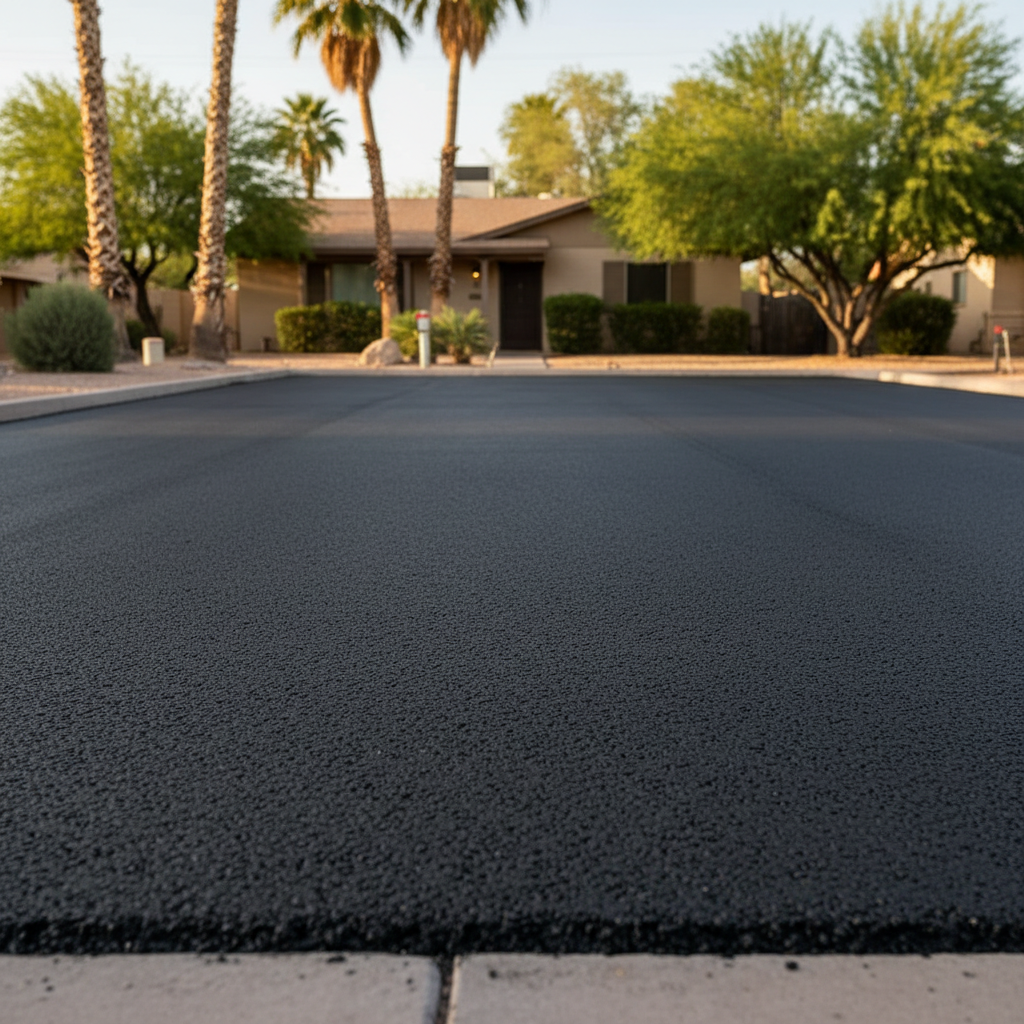
Alright, let's talk commercial asphalt. If you own a property in Mesa with a parking lot, an access road, or any kind of paved area that sees more traffic than your average driveway, you're dealing with commercial asphalt. And trust me, it's a different beast than the stuff you put down for your home. Homeowners often ask me the same questions, so I figured I'd lay it all out for you. No marketing fluff, just straight talk from someone who's been paving Mesa for years.
What's the Big Deal? Is Commercial Asphalt Really Different from Residential?
You bet it is. It's not just a fancy name, you know? Think about it: your home driveway sees your car, maybe a visitor's car. A commercial parking lot, even a small one, gets delivery trucks, customer vehicles all day, every day, and a lot more foot traffic. That means it needs to be tougher, and it's built differently from the ground up.
- Composition: Commercial asphalt uses a denser mix, often with higher-grade materials designed for strength and resilience. Residential asphalt is a lighter mix, good for lighter use.
- Thickness: Commercial lots need thicker asphalt layers to handle heavy loads and constant use. We're talking about supporting big trucks and heavy equipment here.
- Drainage & Engineering: There's a lot more science in commercial paving. You need proper drainage to prevent water pooling, especially with our monsoon rains here in Mesa. If water sits, it'll break down the asphalt fast.
- Regulations: Commercial projects have specific design and safety regulations, including ADA compliance for things like accessible parking spaces.
So, yeah, it's a big deal. You can't just slap down residential-grade asphalt and expect it to hold up under commercial traffic. It'll fail, and you'll be paying for repairs sooner than you think.
How Long Should Commercial Asphalt Last in Mesa's Heat?
This is a common one, and the answer isn't a simple number. In Arizona, asphalt's lifespan is generally shorter than in cooler climates because our intense sun and high UV exposure make it age faster. I've seen commercial parking lots last anywhere from 12 to 18 years, sometimes up to 20 or even 30 years with proper care.
Here's what really impacts that number:
- Installation Quality: If the base wasn't prepped right, or the asphalt mix wasn't suitable for our climate, it won't last. Poor installation can cut the lifespan in half.
- Traffic Load: How many vehicles, and how heavy are they? A busy retail center will wear down faster than a small office park.
- Maintenance: This is huge. Regular sealcoating, crack sealing, and quick pothole repairs make a massive difference. Skipping maintenance significantly reduces its life.
- Drainage: Standing water is asphalt's enemy. Good drainage is key to preventing premature deterioration.
So, while the average is around 12-18 years for commercial lots here, you can push that higher with smart choices and consistent upkeep.
What's the Difference Between Sealcoating and Resurfacing? When Do I Need Which?
These two get confused a lot, but they're for different problems. Think of it like this:
- Sealcoating: Protection and Prevention. Sealcoating is a thin, protective layer applied over existing asphalt. It's like sunscreen for your pavement. It shields against UV rays, water, oil, and chemicals, preventing oxidation and keeping it looking fresh. You typically do this every 2 to 4 years on commercial lots. It's for asphalt that's in pretty good shape, with only minor cracks and fading. It doesn't fix structural issues.
- Resurfacing (Overlay): Repair and Renewal. Resurfacing, or an overlay, means applying a new layer of hot asphalt (usually 1.5 to 2 inches thick) over your existing pavement. This is for when you have widespread cracking (like alligator cracks), surface erosion, uneven spots, or multiple potholes, but the base layer is still solid. It adds structural integrity and can extend the life of your asphalt by another 8 to 15 years. It's a bigger investment than sealcoating, but it's not as costly as a full replacement.
If you're seeing widespread damage, sealcoating won't cut it. You'll need resurfacing. If your lot is just starting to show minor wear, sealcoating is your best bet for preventative care. A professional inspection is the best way to figure out what your property truly needs.
My Commercial Parking Lot Has Potholes and Cracks. What Are My Repair Options?
Potholes and cracks are inevitable, especially with our extreme temperature swings in Mesa that cause asphalt to expand and contract. The good news is you've got options, but catching them early is key.
- Crack Sealing: This is crucial. We fill cracks with a rubberized sealant to stop water from getting underneath and damaging the base. This prevents small cracks from turning into big, expensive problems.
- Asphalt Patching: For isolated potholes or small areas of failure, we can patch them. This often involves cutting out the damaged section, preparing the base, and filling it with new hot-mix asphalt.
- Milling and Paving (Mill & Cap): If you have larger areas with significant damage but the base is still good, we can mill down the top layer of asphalt and then put down a new hot-mix asphalt cap. It's a targeted resurfacing.
- Remove & Replace: For severe, localized damage where the base is compromised, we'll cut out the section, remove all the old asphalt, re-compact the sub-base, and then pave with new asphalt.
Don't ignore these issues. A small crack can become a huge pothole overnight, especially after a good rain. Prompt repairs save you money in the long run.
How Do I Ensure Proper Drainage for My Commercial Asphalt?
Drainage is critical here in Mesa. Standing water, especially after those intense summer storms, is the fastest way to destroy asphalt. It seeps into cracks, erodes the base, and causes structural instability. We've seen it happen too many times.
Here's what goes into good drainage:
- Proper Grading: This is foundational. The ground underneath and around your asphalt needs to be sloped correctly so water flows away from the paved surface, not towards it or pooling on it.
- Catch Basins and Drains: Strategically placed catch basins and trench drains collect water from the surface and direct it away.
- Sub-base Preparation: A well-prepared and compacted sub-base helps prevent water from settling and weakening the asphalt from below.
When Mesa Diamond Asphalt designs or repairs a commercial lot, we always assess the site's unique characteristics, like soil type and elevation, to ensure water moves to safe discharge points. You want to avoid those soft spots in the pavement after a storm; that's a sure sign of a drainage problem.
What Are the City of Mesa's Requirements for Commercial Paving?
The City of Mesa has standards and regulations you need to follow for commercial paving projects. This isn't just about looking good; it's about safety and compliance. You don't want to get hit with fines or have to redo work because you didn't know the rules.
- Asphalt Mixes: The city specifies certain hot asphalt mix criteria, including nominal maximum aggregate size. They even have approved lists for conventional and modified asphalt.
- ADA Compliance: This is a big one. You need to meet Americans with Disabilities Act (ADA) guidelines for accessible parking spaces, including dimensions and access aisles. This also applies to things like ramps and walkways.
- Permits: Commercial projects almost always require permits. You'll likely need to submit detailed plans to the local planning and development department.
- Grading and Drainage: As I mentioned, proper grading for drainage is crucial and often part of city requirements to prevent issues like standing water.
It's always best to work with a contractor who knows Mesa's specific codes and can ensure your project meets all the necessary standards. We keep up-to-date on all these requirements to make sure your project goes smoothly.